


Sample making
Packaging only really convinces once you hold it in your hands. Does your product fit inside? Does the material look the way you imagined? Is the logo in the right place?
A sample answers exactly these questions before your packaging goes into series production.
At LESER, there are four ways to your sample: from our stock range, as a precisely fitting insert made with a tool from the 3D printer, hand-made at our production site in Lahr or from the production facility in the Far East where your series will later be made. Samples are free of charge. We will discuss which route suits your project in our first conversation. → Request a free sample

Why a sample before series production?
Every package looks good on screen. Whether colour, surface and dimensions really fit only becomes clear with the real thing. A sample shows what a drawing cannot: how the lid opens, how your product sits in the insert and how the embossing looks on the material.
A change to the sample is made quickly. A change after the start of series production is not. That is why at LESER you check your packaging in your hands beforehand and give us feedback before we go into series production.
Four ways to your sample: Which one suits your project?
Every project is different. That is why we do not offer just one sample route, but four:
-
01
From our stock range
You choose items from our Shop and test them with your product. The fastest way to check material, size and overall effect.
-
02
Insert with the 3D printer
For a precisely fitting insert, we print the tool on the 3D printer and use it to make your sample. This is more affordable than a standard thermoforming tool and ideal for samples and small quantities.
-
03
Hand-made in Lahr
Our production team makes your sample by hand, with real material and a real surface. If the combination of material and foil is new, we carry out an embossing test before the order.
-
04
From production in the Far East
We make custom-shaped slip lid boxes by hand in the Far East. Your sample is made there too, so you see the result under series production conditions.
Which route is right depends on shape, material and quantity. We will recommend it to you in our first conversation.
Sample making at LESER: what you get
-
Free samples
You receive your sample for your project free of charge. The exception is very expensive cases, for example our highest-quality watch cases.
-
Four sample routes
From a stock item to a sample from series production.
-
Tool from the 3D printer
Precisely fitting inserts as samples, without an expensive tool for series production.
-
Embossing test for your logo
If the combination of material and foil is new, we test the embossing before the order.
-
One dedicated contact
For your region and your industry, from enquiry to series production.
Sample making with the 3D printer
Coins, medals or delicate figurines need an insert in which they sit securely. For this, our 3D printer does not print the packaging, but the tool: a thermoforming mould that fits your item exactly. We use it to form your insert in the thermoforming machine.
This lets you check on the sample whether your product sits securely in the insert, without needing an expensive series tool in advance.
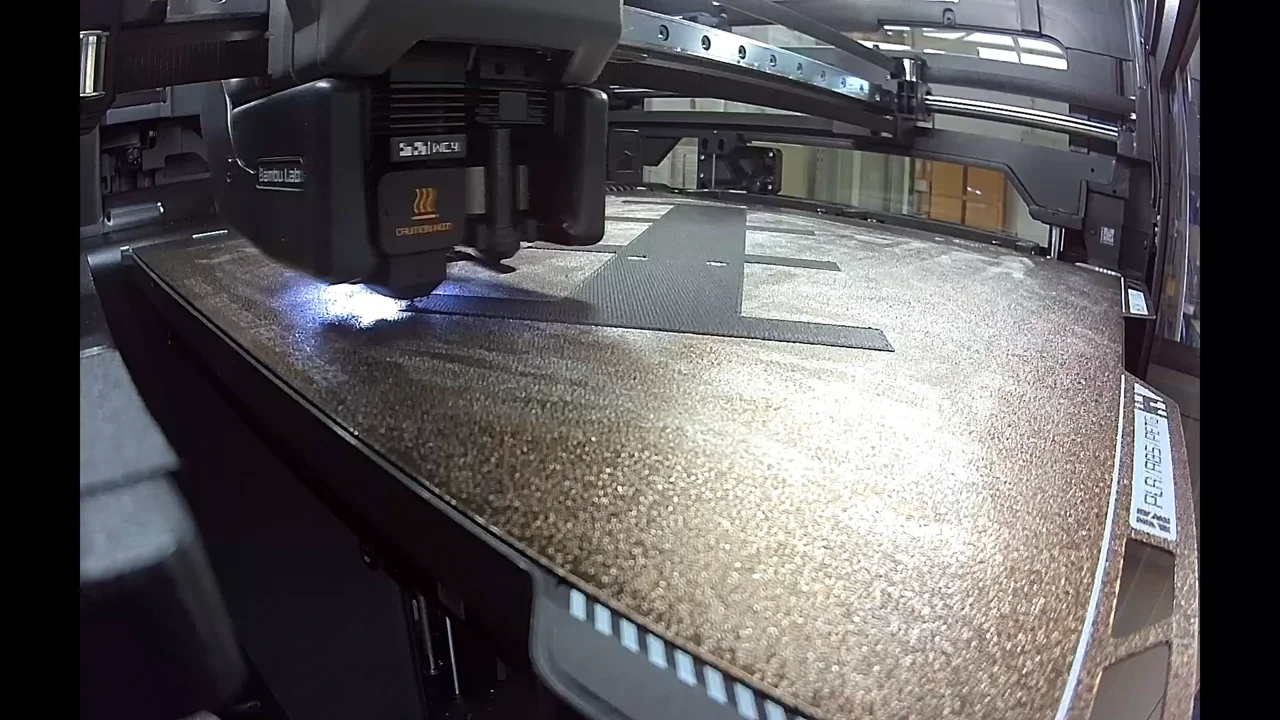
When you click ‘Play’, the video is loaded from Vimeo (USA). In doing so, your IP address and technical data are transmitted to Vimeo and cookies are set. For more information, please see the privacy policy.
- 01
Check the fit early
Your product sits in the insert just as it will later in the series.
- 02
Make changes before series production starts
Dimensions and recess can still be adjusted easily on the sample.
- 03
Decide together
Your team can pick up the insert and assess it together.
How your sample is made
Depending on what you need, we take one of two options: a sample of your box from the plotter, or a precisely fitting insert made with a tool from the 3D printer.
Do you need a sample of your box, for a photo shoot for example, before the series starts? Then we make it for you with the plotter, without any expensive tooling.
- Step 1
Your enquiry
Tell us about your project. A product, a sketch or simply an idea is enough to get started. Your personal contact will get in touch on the same or the next working day and will support you right through to the finished sample.
- Step 2
Joint technical meeting
Together with our technical team, we look at the dimensions, material and structure of your packaging. This makes it clear from the start what your sample should look like.
 Step 3
CAD drawing
First, we draw your packaging in CAD. It contains every dimension, plus all die-cut and crease lines.
 Step 4
Plotter
Our plotter cuts the parts directly from cardboard, without any steel rule. This means you hold your box sample in your hands before a cutting die costing several hundred euros is needed. We also cut sample inserts made of foam or cardboard this way.
 Step 5
Covering by hand
Now it is time for craftsmanship. The covering paper runs through our gluing machine, then our staff carefully wrap it around the blank by hand.
- Step 6
Shipping to you
Finally, we pack your sample securely and send it to you.
Coins, medals or delicate figures need an insert in which they sit securely. We print the right tool for this ourselves.
- Step 1
Your enquiry
Tell us about your project. Send us your item, a sketch or simply an idea. Your personal contact will get in touch on the same or the next working day and will support you right through to the finished insert.
- Step 2
Joint technical meeting
Together with our technical team, we take a close look at your item: its shape, dimensions and sensitivity. Afterwards, you know which insert and which tool suit your project.
 Step 3
3D model in CAD
On the computer, we design the mould for your insert, matched to the dimensions of your item.
 Step 4
3D printer
Our 3D printer does not print the packaging, but what we need for it:
- the tool: a thermoforming mould that fits your item exactly and costs little.
- your item: for delicate pieces such as sandstone figures, we print a replica and design the insert around it.
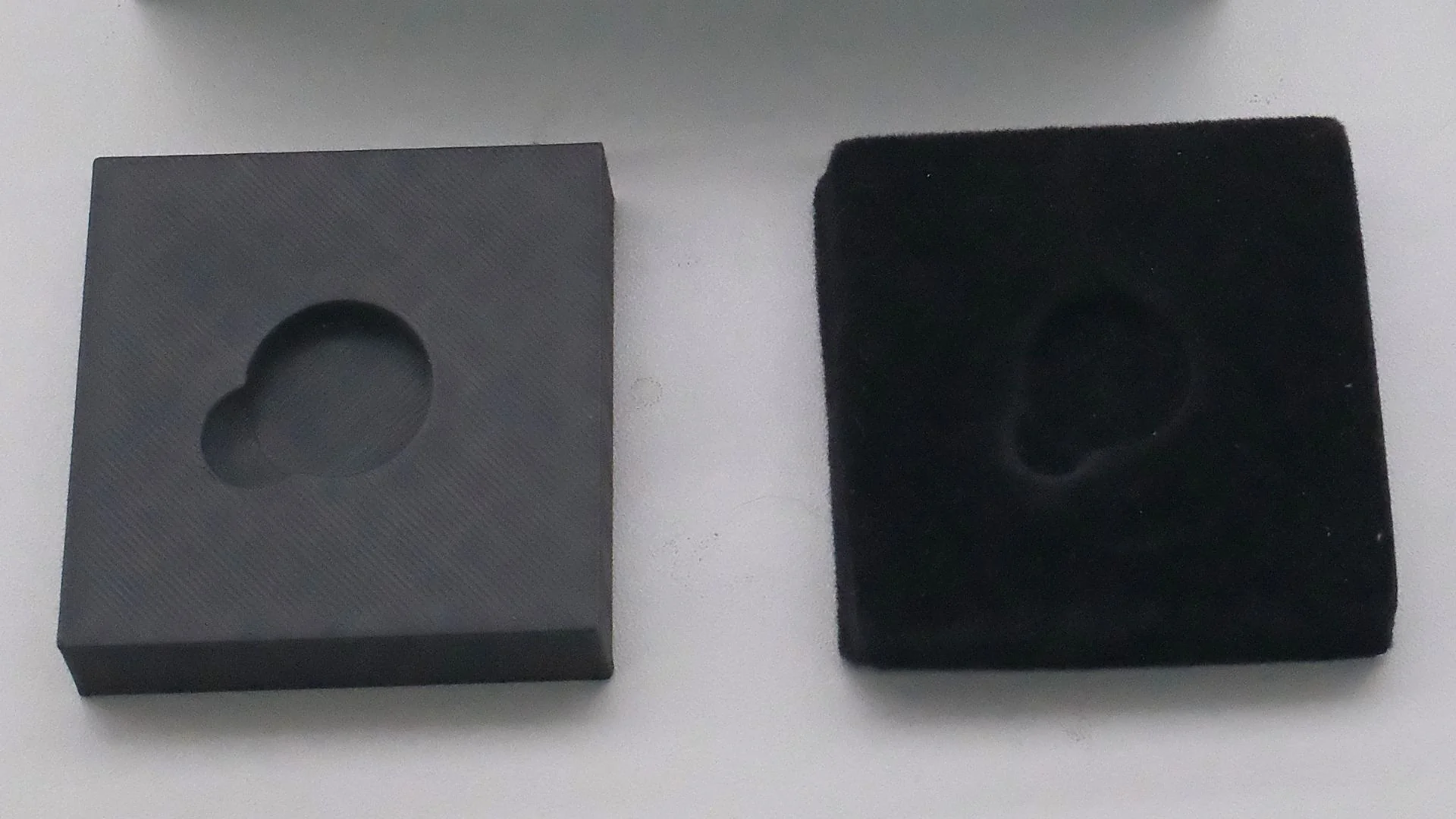
3D print 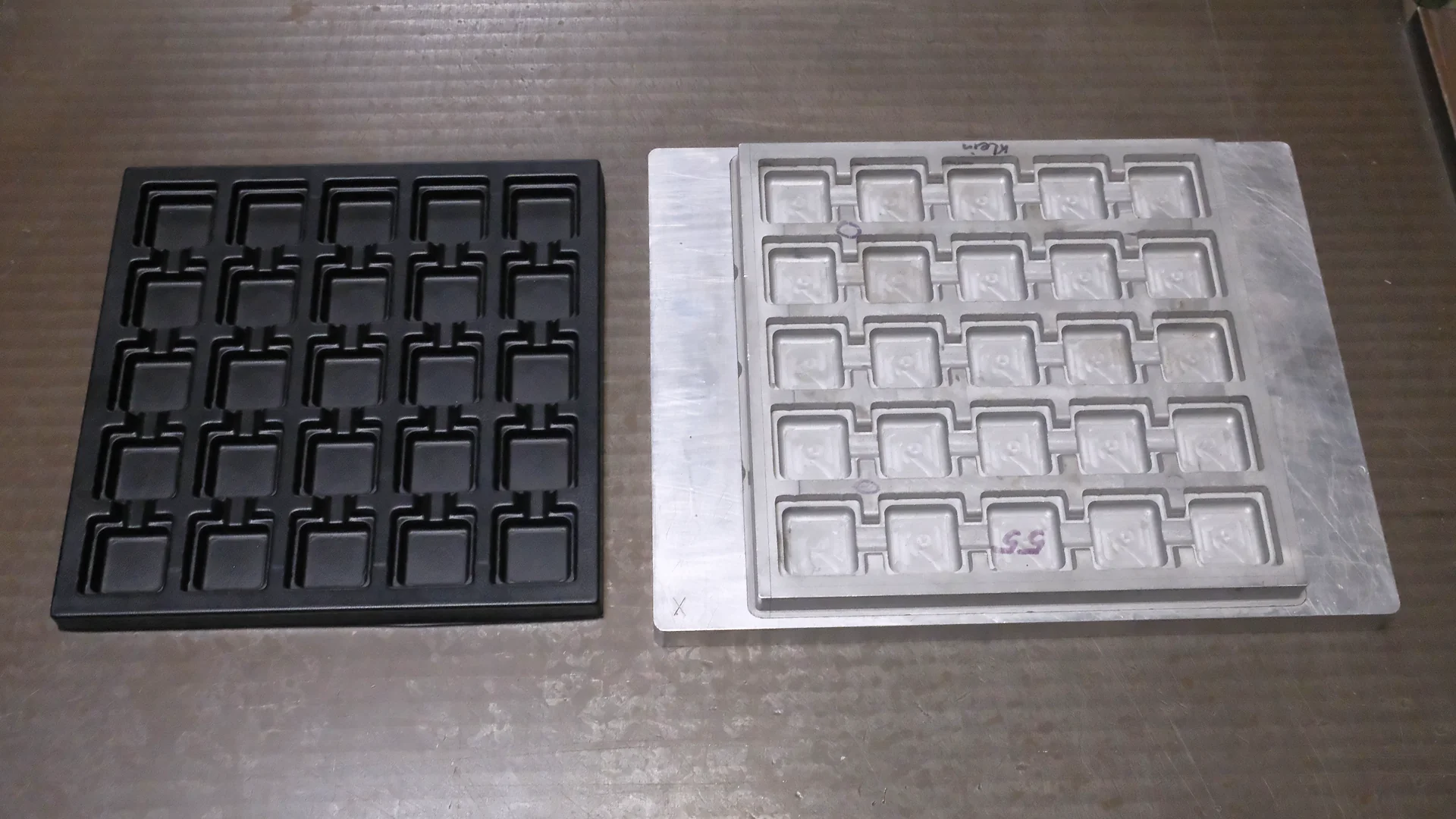
Machine Step 5Two tools compared
A standard thermoforming tool costs around 750 euros. For a sample, that would often be too much, but 3D printing makes it possible anyway. Which tool makes sense for you depends on the quantity. We are happy to advise you and tell you before you order what is worthwhile for your project.
- Tool from the 3D printer: affordable and ideal for samples and small quantities.
- Tool for the machine: around 750 euros, the right choice for larger orders.
 Step 6
Thermoforming machine
In the machine, the film is heated and drawn over the tool. This gives every insert exactly the same shape.
 Step 7
Your finished insert
Your insert is ready. The recess has exactly the shape of your item and holds it securely in place.
How your project works
- Step 1 of 5
You describe your project
By phone, email or contact form, ideally with product dimensions, the quantity you need, your wishes regarding material and colour, and your logo, preferably as a vectorised PDF.
- Step 2 of 5
We advise you personally
Your dedicated contact for your region and industry works out with you what the packaging needs to do.
- Step 3 of 5
We define the sample route
Stock range, 3D printing, hand-made sample from Lahr or sample from production in the Far East.
- Step 4 of 5
You check your sample
You hold it in your hands, test it with your product and give us feedback. If something does not fit yet, we adjust it.
- Step 5 of 5
You approve, we produce
For finishing, you receive a proof in advance. We give you the delivery date for custom-made products with our quotation.
Who benefits from sample making
A sample is useful wherever the packaging forms part of the product:
-
Jewellers and goldsmiths
Test cases from our stock range with your jewellery. Your logo is available from the minimum order quantity of the respective item; finishing does not increase the minimum quantity.
-
Jewellery and watch brands
We make your own packaging in custom dimensions and custom colours from 1,000 units. Beforehand, you receive a hand-made sample in real material. If your jewellery needs a precisely fitting insert, it is made with a tool from the 3D printer.
-
Start-ups and online retailers
Samples from our stock range. As your shop grows, we make your packaging in custom dimensions and colours from 1,000 units.
-
Cosmetics and perfume
Bottles and jars have their own shape. For the precisely fitting insert, we print the tool on the 3D printer, so you can check on the sample whether your product sits exactly. You receive the matching box as a hand-made sample with your finishing.
-
Purchasing and agencies
For large series, the sample is made where your series will later be produced. This lets you align and approve it internally with all parties involved before placing your order.

From what quantity is custom packaging worthwhile?
The sample itself is free of charge. For the later series:
- Standard items with your logo for jewellery, watches, medals and coins: from the minimum order quantity of the respective item, shown on the product page in the Shop.
- Custom dimensions, custom colour or your own construction: as a custom-made product from 1,000 units.
- Custom corrugated cardboard packaging: with your own dimensions and your own print from 5,000 units.
5 reasons why LESER is the right choice for your packaging sample
A sample shows early on whether everything fits. Here is why LESER:
- Reason 01
Experience since 1937
We are a family business in its 5th generation.
- Reason 02
Our own production in Lahr
We manufacture the majority of our packaging in our own plant in Lahr. Your hand-made samples are made there too.
- Reason 03
Four sample routes from a single source
From stock items to samples from series production.
- Reason 04
Honest feasibility check
Where a shape or material reaches its limits, we tell you in advance.
- Reason 05
Personal advice
Dedicated contacts for your region and industry, plus our field sales team.

Need help?
We are happy to help.
Whether by phone, email or contact form: just get in touch. We reply quickly and personally and are glad to help.
Packaging advice
Phone: +49 (0) 7821 / 5803-39
Email: contact@leser.de